
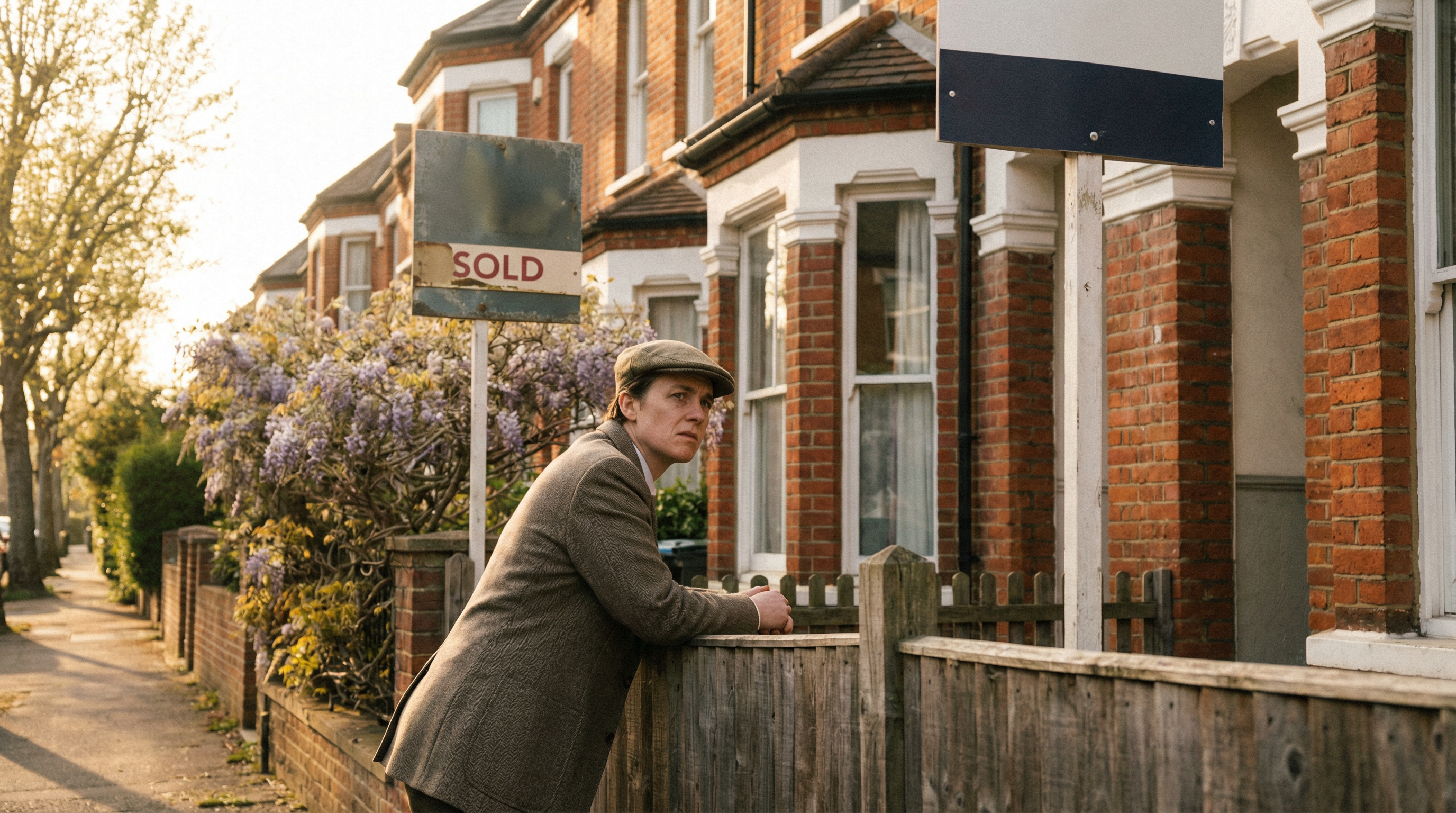
"But next door sold for £650,000."
Every agent in South London hears this. It comes from sellers who've decided their property must be worth at least the same — probably more, because theirs is nicer, isn't it?
The problem: your neighbour's sale price is one data point in a complex equation. Used as the primary pricing reference, it's one of the most reliable routes to sitting on the market for months while correctly-priced properties sell around you.
The Differences That Actually Drive Value
From the pavement, two properties can look almost identical. Inside the transaction, the differences that determine value are significant and numerous.
Timing. They sold six months ago when mortgage rates were marginally lower and the buyer pool was slightly deeper. Or they sold in March when demand peaks seasonally. Six months in the property market is not a trivial interval — conditions shift, buyer numbers change, and a price achieved then isn't automatically achievable now.
Condition. You walked past once and it looked fine from the street. You have no knowledge of what was inside. Perhaps they'd invested £35,000 in a kitchen and bathroom renovation. Perhaps they'd done a loft conversion. Perhaps their boiler was three years old and yours is fifteen. These differences are worth tens of thousands and you can't see them from the pavement.
Lease length. For flats, this is significant and frequently overlooked. A flat with 120 years remaining versus one with 85 years can represent a £30,000–50,000 difference in value — on otherwise identical properties, in the same building. Sellers don't think about this because both flats look the same from outside.
Floor and aspect. Ground floor versus second floor in the same block can be a £20,000–40,000 swing. South-facing garden versus north-facing. Views versus no views. Quiet road versus a busier one. These aren't cosmetic distinctions — they're fundamental value drivers that can account for 10–15% price variation between genuinely similar properties.
Chain and competition. If your neighbour was chain-free and your buyers are in a chain, that's a negotiating difference. If they had three competing buyers and you have one viewing every ten days, their price reflected that competition and yours won't.
And critically — you likely don't know what they actually accepted. You know what was listed on Rightmove. That isn't necessarily what completed.
How Comparable Sales Get Used to Justify Overpricing
This is where the relationship between sellers and their agents can become counterproductive, even when neither party intends it.
You believe your property is worth £650,000 because next door achieved that. An agent who gives you an honest market assessment of £590,000 loses your instruction to the next agent who tells you what you want to hear. So the incentive structure nudges agents toward showing you the comparable sales that support the higher number — the best nearby result, the slightly larger property three streets away, the one with the extension.
What doesn't get shown: the four properties genuinely comparable to yours that sold for £575,000–£600,000 in the last quarter. The one that's been sitting at £640,000 for four months without an offer. The one that reduced from £650,000 to £610,000 and eventually sold at £595,000.
The result is a valuation anchored on the best outcomes rather than the typical ones — and a pricing decision made on incomplete information.
The Selective Reading Problem
Sellers do the same thing. The £650,000 result nearby is treated as evidence that your property is worth at least that. The £550,000 result down the road is dismissed — "that one was in worse condition," "that was a quick sale," "they must have had reasons to accept less."
Maybe. Or maybe the £550,000 result is simply what the current market pays for this type of property, and the £650,000 result had specific circumstances — condition, timing, competition, chain situation — that yours doesn't share.
Pricing works from the full picture. The market doesn't care what you paid, what you need for your next purchase, or what your neighbour achieved. It reflects what buyers will pay today for what you're offering, compared to everything else available.
What Actually Determines Your Asking Price
A well-reasoned valuation looks at multiple comparable sales — not the highest, not the most recent, but the most genuinely similar — and adjusts for timing, condition, specification, aspect, and current supply and demand dynamics at your specific price point.
It also looks at what's currently on the market and not selling. A property that's been at £640,000 for twelve weeks with minimal viewing activity is price evidence too — it tells you what the market won't currently pay, which is just as useful as knowing what it will.
When an agent shows you comparable sales to support your valuation, ask them to show you the full picture: the sales that support the number, and the ones that don't. An agent who can only show you evidence pointing one direction isn't giving you analysis — they're giving you a case for a number they've already decided to pitch.
What Happens When You Price on the Wrong Comparables
The sequence is consistent enough to be predictable.
In the first two weeks, a fresh listing generates viewing interest from everyone actively searching in your area and price range. Those buyers view, compare your property to alternatives they've already seen, and make decisions based on relative value. If you're priced above what the market supports, they don't offer — they buy something else.
By weeks three and four, you're no longer a fresh listing. Viewing frequency drops. The initial buyer pool has passed through.
By weeks eight to twelve, your property is stale. Everyone currently searching in your area has already seen it and made a decision. New buyers arriving in the market see the days-on-market figure and reasonably wonder whether something is wrong.
The price reduction comes — but now you're reducing a stale listing rather than pricing correctly from the start. The buyers who would have moved on a well-priced fresh listing have already bought elsewhere.
The irony is that a correctly-priced property, presented well, often achieves more than an overpriced one — because competition among buyers moves the price up, rather than one buyer negotiating a reduced price on a property they know has been sitting.
The Bottom Line
Your neighbour's sale price is a starting point for a conversation about value, not a conclusion. It's useful context alongside multiple other sales, adjusted for timing, condition, and the specific characteristics of your property versus theirs.
Used as the primary pricing justification, it produces overpriced listings that sit, go stale, and eventually sell for less than a correct initial price would have achieved — with several months of stress in between.
A good agent explains these nuances clearly and shows you why your property may or may not be comparable to the sales you're referencing. If your agent is simply validating a number you've arrived at based on one nearby sale, they're not doing the job.