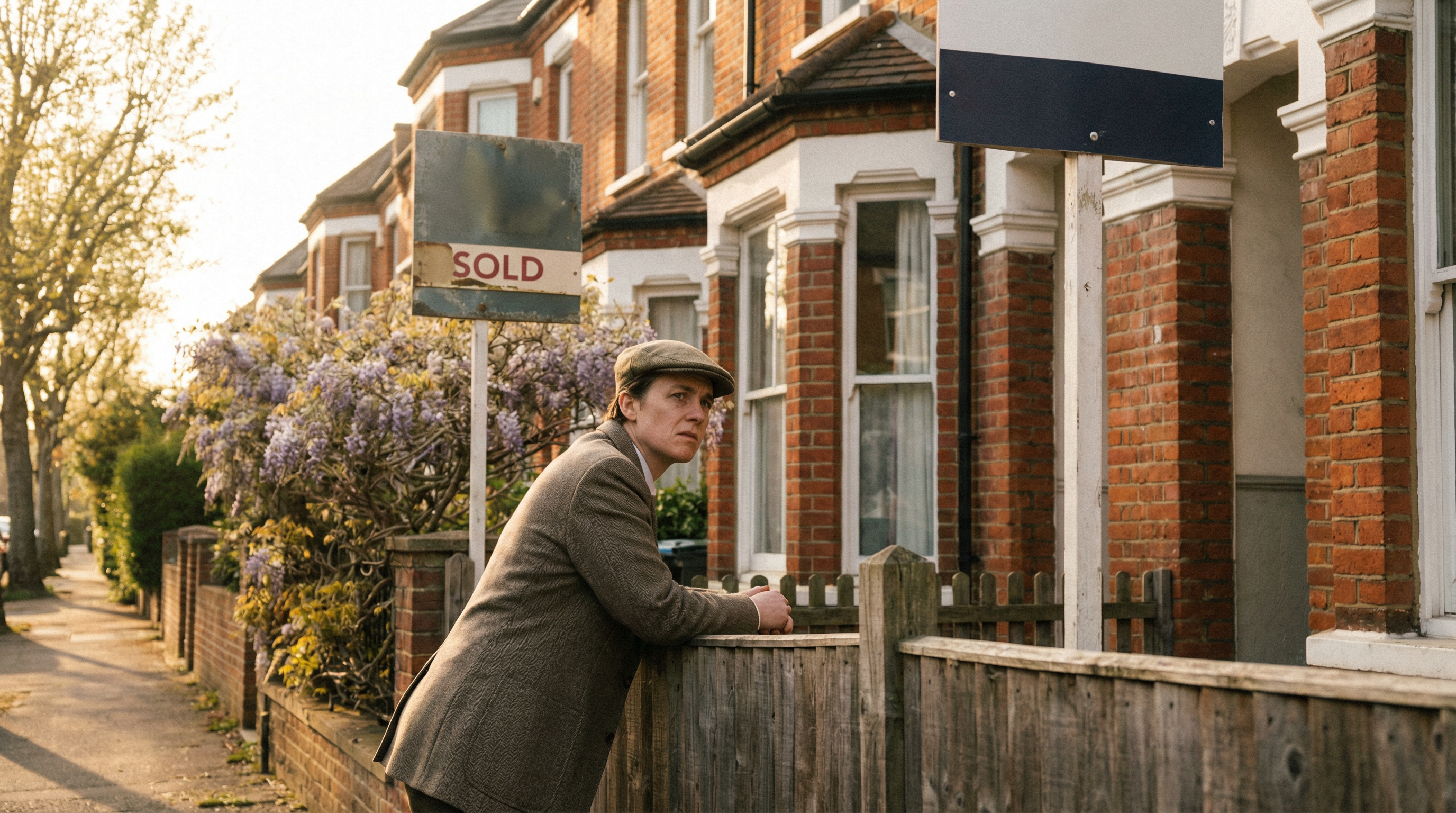
Here is something most agents won't say at a valuation meeting: overpricing your property is one of the worst things that can happen to your sale. Yet it's also one of the most common.
The instinct is understandable. A higher valuation sounds like better news. If an agent says your property is worth £450,000 and another says £410,000, the first number is more appealing. It might also be more affordable for the next purchase you have in mind.
But a property that launches overpriced and eventually sells after reductions consistently achieves a lower final price than one that launched correctly from the start. Here's the mechanism that makes that true.
The First Two Weeks Are Your Best Weeks
When a property appears on the portals for the first time, it receives a surge of attention. Fresh listings are pushed to the top of search results. Buyers with saved searches receive alerts. Agents with registered buyers make calls. This is the concentrated window of maximum visibility — typically the first ten to fourteen days on market.
The buyers in that window are not casual browsers. They have been searching for months. They've seen the three-bedroom semi that sold in your road three months ago. They've walked through the similar property that's been listed for five weeks. They know what comparable properties cost in your area. They are, in other words, exactly the buyers who can and will move quickly if your property is correctly priced and well-presented.
An overpriced listing loses these buyers without gaining their attention. They see the price, compare it to what they know the market supports, and move on. They don't book a viewing. They buy something else. You've burned your most valuable marketing window against an audience that was perfectly positioned to offer — but at a price your listing didn't justify.
The Stale Listing Problem
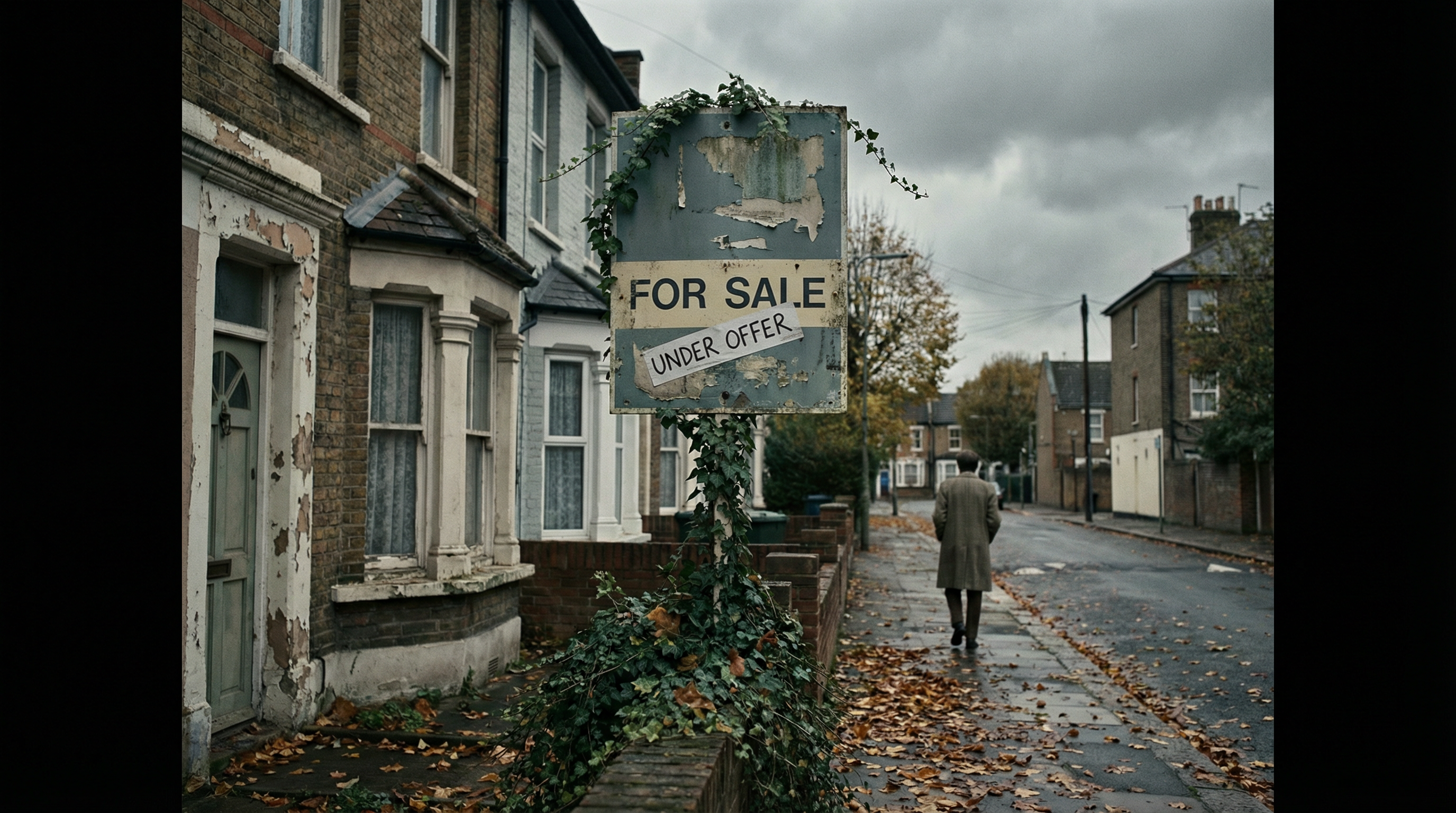
Every portal timestamps when a property first appeared. Buyers can see how long it has been on market. A property that has been listed for six, eight, or twelve weeks without selling carries a visible signal that experienced buyers read clearly: either the price is wrong or something is wrong with the property.
This creates a self-reinforcing problem. The longer a property sits, the more buyers assume there's a reason it hasn't sold. They approach viewings with more scepticism and negotiate more aggressively. The seller's position weakens with each passing week not because the property has changed, but because the perception has.
Price reductions amplify this. A reduction confirms that the original price was wrong and signals that the seller is under pressure. Buyers who might have offered at £430,000 on a fresh listing will offer £415,000 on a listing that started at £450,000 and has been reduced to £430,000 — because the reduction has told them the seller will accept less, and because the stale days-on-market figure suggests limited competition for the property.
Why Agents Overvalue to Win Instructions
Most agents understand exactly what overvaluation does to a sale. The reason it persists is that the incentive structure makes it rational for them, even when it isn't rational for sellers.
When three agents value your property, the one who gives you the highest number is most likely to win your instruction. The one who gives you the most accurate number may lose it to a competitor. An agent who doesn't win the instruction earns nothing from it. An agent who wins it with an overvalued price, sees the property sit and reduce, and eventually completes at a lower price still earns their commission.
The strategy is sometimes conscious and sometimes simply a product of competitive pressure — agents know what happens, but the alternative is losing the instruction to someone who will tell sellers what they want to hear. "Managing expectations" with a price reduction three months later is a problem for future self.
The tell is in the comparable sales evidence. A well-reasoned valuation shows you the specific sold properties it's based on, adjusts for timing and condition differences, and explains any premium over those comparables with specific, verifiable reasons. A valuation that arrives at a higher number through general optimism about the market or vague remarks about potential doesn't have that foundation.
What Correct Pricing Actually Achieves
There's a competitive dynamic that only operates when a property is priced correctly or slightly below market value. Multiple buyers identify the property as representing fair or good value. They view quickly, because they know a well-priced property won't last. They offer strongly, because they don't want to lose it. Where competing offers exist, the final price often exceeds the asking price.
This isn't theoretical. The pattern appears consistently in markets where properties are correctly priced against their comparables: two or three buyers competing produces a better final price than one buyer negotiating against a seller who needs to sell and has run out of other options.
A property correctly priced at £415,000 that attracts five interested buyers will typically complete at £415,000–425,000 within three weeks. The same property launched at £450,000, reduced to £430,000 after eight weeks, and eventually sold at £405,000 after four months has achieved a worse outcome by every measure — final price, time on market, and the stress involved in getting there.
How to Identify Overvaluation at Valuation Stage
Ask each agent to show you the specific comparable sales their valuation is based on. These should be properties that have completed — not listed, completed — in the last three to six months, genuinely similar to yours in size, condition, and location. If an agent can't produce these, the valuation isn't evidence-based.
Ask what percentage of their listings require a price reduction before selling. An agent pricing accurately should see perhaps 20–30% of properties needing adjustments. A significantly higher proportion suggests systematic overvaluation to win instructions.
Ask how any premium over the comparable sales is justified. "Your kitchen is newer" or "you have off-street parking" are specific, verifiable reasons. "The market is moving" or "you never know unless you try" are not reasons — they're cover for a number that isn't supported by evidence.
And consider the agent whose valuation is lower than the others. This agent may be telling you something the others aren't, for reasons that serve your interests rather than their instruction pipeline.
The Bottom Line
Your property will sell for what the current market determines it's worth. The question is whether you start at that price and allow competition to develop, or whether you start above it and spend months watching the position deteriorate.
The agent who wins your instruction with the highest valuation isn't doing you a favour. The agent who prices your property correctly from launch, generates competition among buyers, and achieves the best outcome in the shortest time is doing the job properly.
Choose agents based on evidence of performance — their average time to sale, their achieved-price-to-asking-price ratio, their instruction-to-completion rate — rather than on who flatters you with the highest number. Those metrics tell you what their realistic valuations actually produce, which is the only number that ultimately matters.