
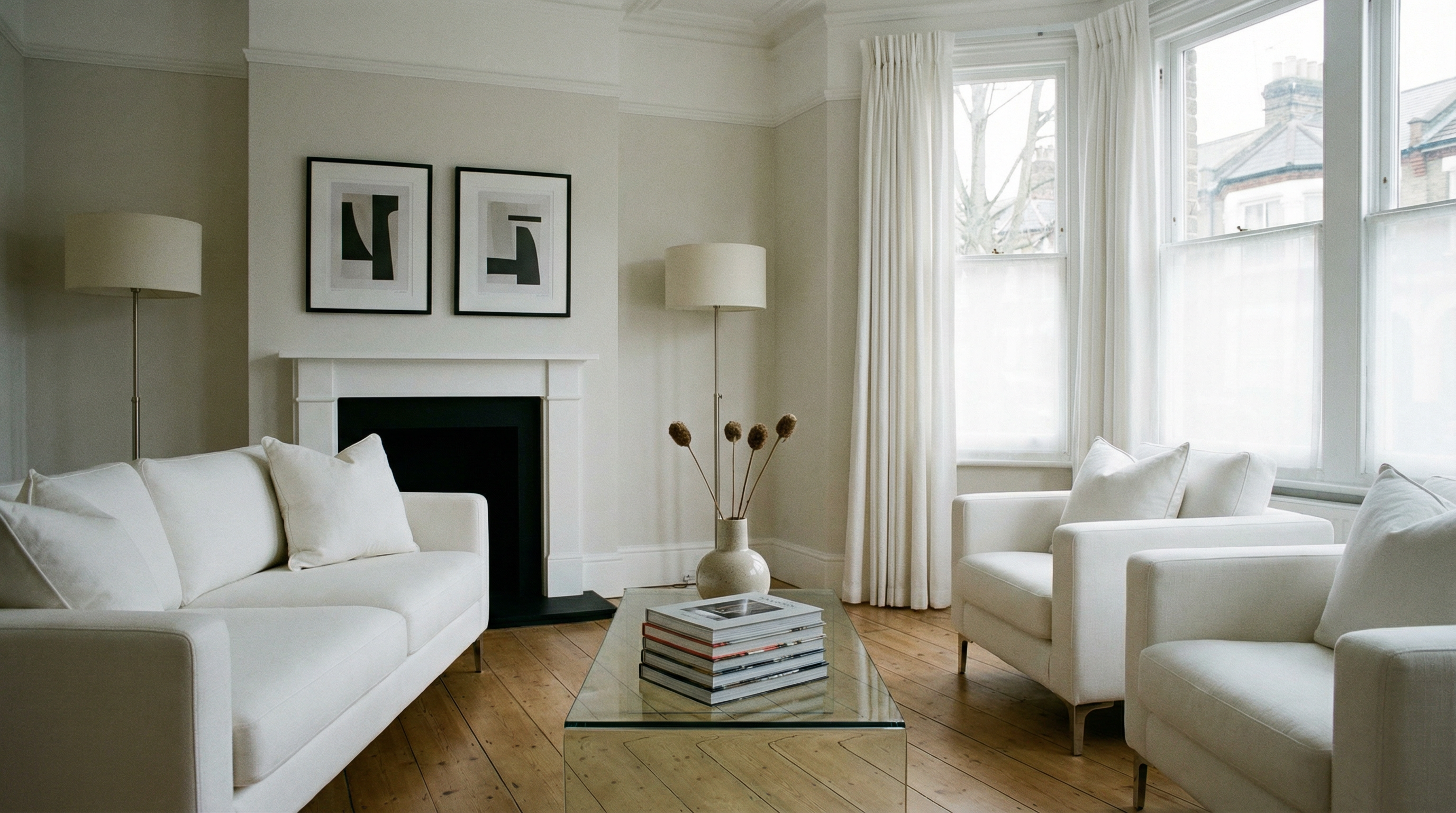
The advice is everywhere. Declutter. Depersonalise. Style it like a show home. Fresh flowers, neutral colours, surfaces completely clear. Make it look like nobody actually lives there so buyers can imagine themselves in the space.
The logic is sound in principle. Buyers need to project themselves into a property, and that's harder when they're surrounded by someone else's accumulated possessions and personal photographs.
But there's a version of this advice that goes too far — and when it does, it creates a problem. A property that photographs beautifully but feels immediately wrong when you're physically standing in it.
The Property That Feels Like Nobody Lives There
You walk in and something is slightly off. Everything is perfect. The cushions are arranged precisely. Nothing is out of place. The surfaces are completely clear. It looks exactly like the listing photographs.
And it feels completely lifeless.
Buyers can't imagine living in a space that doesn't feel like anyone could actually live there. It has the quality of a hotel room or a new build show flat — created for photography, not for habitation. This is particularly common with investment properties that have been professionally staged, sometimes at considerable expense, to a standard that impresses the camera and unsettles the visitor.
Immaculate and appealing are not the same thing. Appealing is what sells properties.
When Some Evidence of Life Actually Helps
A counterintuitive observation, but one that experienced agents recognise: a degree of controlled order — as opposed to clinical emptiness — is often more effective than total sanitisation.
Not mess. Not clutter. But evidence that real people live here comfortably. Books on shelves. A coat on a hook. Cups in a kitchen cupboard. A desk that looks like someone works at it. This tells buyers something important: this space functions. People with actual lives inhabit it without it feeling cramped or inadequate.
The completely stripped property raises a different set of questions. Is the storage really sufficient if nothing can be left out? Are they hiding something behind the carefully neutral presentation? Why does it feel so impersonal?
Buyers are perceptive. They know when a property has been staged for sale. The question is whether the staging feels like a well-maintained home being presented well, or a set dressed to conceal something.
The Photography vs Reality Problem
Agents want photographs that generate clicks and viewing enquiries. Clicks come from images that stand out on Rightmove. And heavy styling — artfully arranged bookshelves, seventeen decorative cushions on a bed, single objects placed with deliberate care on otherwise empty surfaces — photographs well.
The problem is that what looks considered and elegant in a photograph can look staged and slightly odd when you're physically in the room. The bookshelf where every spine faces the same direction and books are grouped by colour: striking in a photo, peculiar in person. The surface with a single deliberately placed object: composed in the image, leaving buyers wondering where everything else goes.
Your property needs to photograph well — that remains true. But it also needs to feel right during a viewing, and these two objectives sometimes conflict. The staging that maximises photography performance isn't always what maximises buyer engagement when they're physically present.
The Investment Property Problem
This dynamic is particularly pronounced with investment properties being sold after tenants have left. Landlords, anxious about presentation, strip everything out, apply fresh magnolia paint, add generic furniture if needed, and produce something that is inoffensive to the camera and forgettable in person.
These properties blur together. A buyer viewing six properties in a Saturday morning will struggle to distinguish them afterwards because they all used the same staging logic and produced the same result. A property with some character — even imperfect, even slightly worn — is memorable in a way that generic neutral staging isn't.
Memorable properties get offers. Interchangeable ones get forgotten.
The Appropriate Middle Ground
The standard to aim for is a well-maintained home that's being presented honestly — tidy, clean, organised, but still recognisably somewhere a person lives.
Surfaces mostly clear, not eerily bare. Cupboards organised, not suspiciously empty. Decor neutral enough not to be distracting, but not so devoid of character that it communicates nothing. The property should answer a buyer's central question — "could I live here comfortably?" — not raise further questions about what the staging is compensating for.
A useful test: does this feel like somewhere you'd actually want to live, or does it feel like a show flat in a new development? If the latter, the staging has probably gone too far.
What Your Agent's Incentive Is Here
Agents want strong photography because photography drives viewing numbers, and viewing numbers are the activity metric they report to you. There is a genuine incentive to push for heavy staging on photography day.
But viewings are not sales. Sales come from buyers forming an emotional connection with a property when they're physically present. That connection is harder to achieve in a space that feels artificially constructed rather than genuinely lived in.
The best agents understand the balance: present the property well, produce photographs that are honest and appealing, but don't stage to a point where the viewing experience is a letdown compared to the listing. When the photographs promise one thing and the viewing delivers something slightly less, buyer confidence erodes.
The Bottom Line
You're selling a home, not a concept. Buyers want to see how a space functions for real people — that the storage works, that the kitchen is usable, that the rooms are liveable. They respond to properties that feel cared for and genuine.
Tidy up, clean thoroughly, tone down anything strongly personal. But don't strip the property of every trace of habitation in pursuit of photographic perfection. The show home that photographs brilliantly but feels wrong during a viewing is not an asset — it's a gap between expectation and experience that buyers feel immediately and struggle to articulate, but which reliably produces viewings without offers.
Leave some books on the shelf.