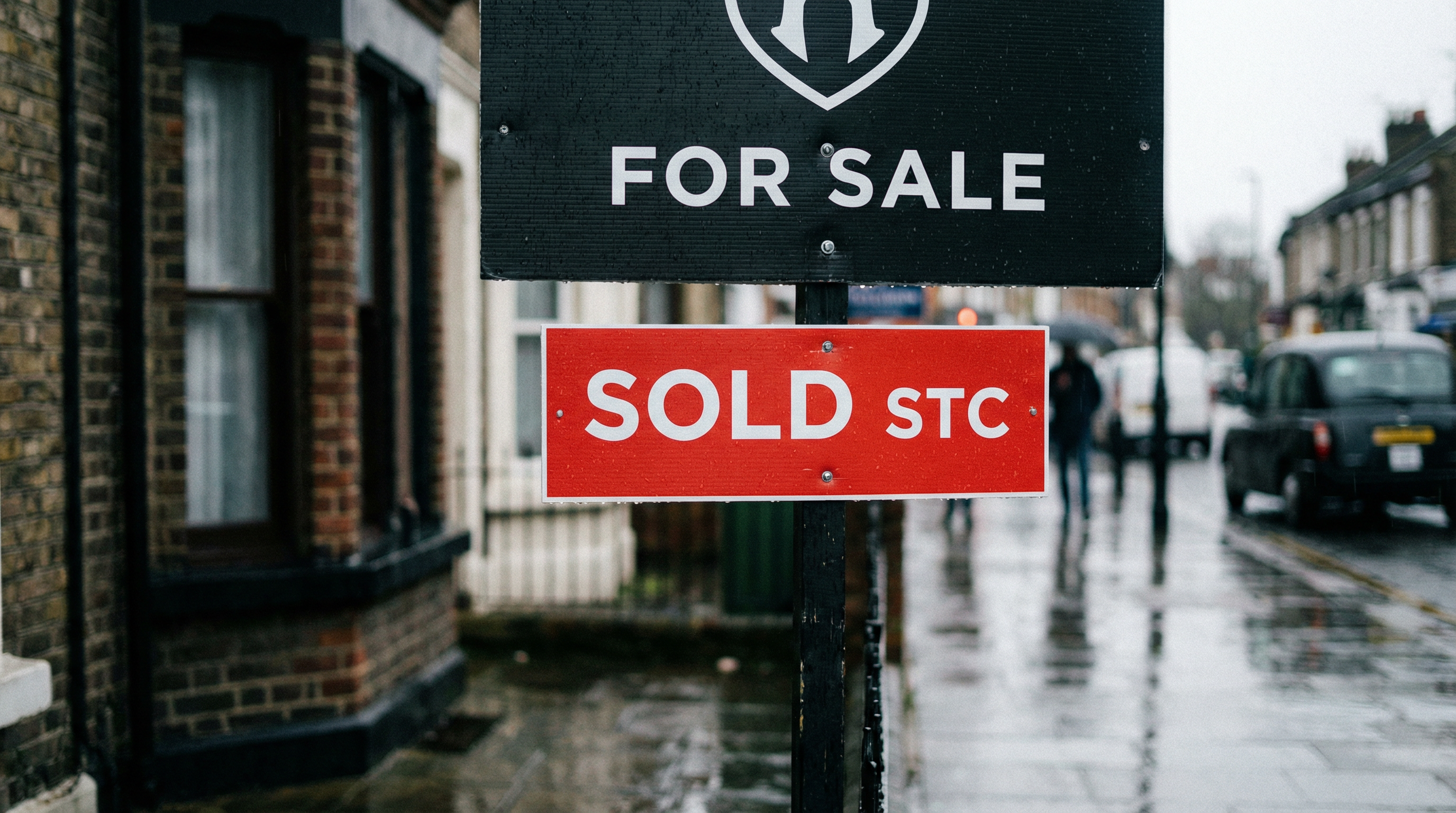

You've been on the market for five days. Your asking price is £625,000. A buyer offers £605,000.
Your agent says it's a reasonable opening and suggests countering. Your partner thinks you should hold out for asking price. Someone who sold their house three years ago is confident a better offer will materialise.
You reject the £605,000 offer.
Eight weeks later, you accept £590,000 from a different buyer.
This sequence plays out across London hundreds of times every week. Sellers turn down their first offer expecting the market to improve. Instead, the property sits, becomes familiar, and eventually sells for less than the rejected offer — after months of uncertainty that nobody was expecting.
Why Early Offers Tend to Be the Strongest
When a property first appears on the portals, it reaches everyone who has a saved search matching its criteria. These are active, motivated buyers — people who have been searching for some time, who check their alerts regularly, and who are ready to act when the right property appears. They see your listing when it's new and when they have no knowledge of whether it's generated interest from anyone else.
This uncertainty works in your favour. A buyer who sees a fresh listing and likes it doesn't know whether five other people liked it too. The instinct to move decisively, before competition emerges, produces stronger offers than the same buyer might make three weeks later, once it's clear the property hasn't sold quickly and no urgency is required.
The buyer who offers in week one has revealed something valuable: they want your property enough to act. They're not browsing. They've done the comparison against alternatives in their search range, and yours is where they've chosen to put their offer. That motivation is worth something beyond the number itself — it means they're more likely to proceed without complications, less likely to renegotiate aggressively post-survey, and more likely to drive toward exchange efficiently.
What Happens to Properties That Wait
Properties that sit on the market accrue a digital history that buyers can see and interpret. Six weeks of exposure without an accepted offer tells every subsequent viewer something: either the price is wrong, or there's something about the property that hasn't appealed to the people who've already seen it. Neither interpretation makes the remaining buyers more generous.
Later offers arrive in a different context. The buyer knows you haven't accepted anything yet. They may know there's been a price reduction. They have more negotiating information than the buyer who offered in week one — and they use it. Offers at week eight tend to be lower than offers at week one because the seller's position has visibly weakened.
A price reduction, when it comes, compounds this. Reducing from £625,000 to £615,000 after six weeks tells subsequent buyers two things: that the original price was wrong, and that the seller is willing to move. Both of these encourage lower offers rather than higher ones.
The Maths of Holding Out
It's worth calculating concretely what rejecting an early offer tends to cost.
Scenario A: Counter and settle early. You receive £605,000 in week one, counter at £615,000, and agree at £611,000 after two days of negotiation. You complete twelve weeks later. If your monthly holding cost — mortgage, maintenance, insurance — is £2,000, three months of costs amounts to £6,000. Net position: approximately £605,000.
Scenario B: Reject and wait. You turn down £605,000. By week six you reduce the price to £615,000. At week ten a second buyer offers £600,000. After negotiation you agree at £603,000 and complete at week twenty-two. Five and a half months of holding costs at £2,000 per month: £11,000. Net position: approximately £592,000.
The difference between the two scenarios: approximately £13,000 and ten weeks of additional stress and uncertainty. This is a realistic rather than pessimistic comparison — it reflects what actually tends to happen when sellers hold out for improvements that don't materialise.
When You Should Seriously Consider Accepting
Not every first offer deserves immediate acceptance, but certain conditions make a strong case for it.
If the offer is within 3–5% of your asking price and your asking price was based on solid comparable evidence, this offer is probably close to market value. The difference between £605,000 and £625,000 is meaningful, but the realistic alternative — a second offer at £590,000 after several months — is more expensive than the gap feels.
If the buyer is chain-free with a mortgage offer in place, the certainty premium is real. A chain-free buyer at £605,000 frequently produces a better net outcome than a buyer-in-a-chain at £615,000, because the risks of the latter transaction are considerably higher and the costs of a chain collapse fall heavily on you.
If feedback from other viewers has been lukewarm or consistently pointed at price, the first offer is telling you something the viewing traffic has already suggested. One motivated buyer in a field of non-converting viewers is often the market speaking.
If you have time pressure — an onward purchase you need to protect, a relocation deadline, a financial commitment on the other side — certainty now is worth a premium over a speculative better offer later.
When Caution About the First Offer Is Warranted
There are circumstances where a first offer genuinely shouldn't be accepted immediately, though they are less common than sellers assume.
If the offer is significantly below comparable sales evidence with no explanation — not just below asking price but below what the market has consistently demonstrated this type of property achieves — it's reasonable to counter firmly and see whether the buyer is at their genuine limit or testing yours.
If you've been on the market for 48 hours and have multiple viewings already booked, waiting a few more days to allow that interest to develop is rational. But this window is days, not weeks. The fresh listing advantage erodes quickly.
If there are clear signals the buyer isn't serious — conditions that would make proceeding impractical, or behaviour that suggests they're not genuinely committed — it's better to decline and continue marketing.
The Survivorship Bias in Stories About Holding Out
There are sellers who rejected a first offer and eventually sold for more. These stories circulate because they're satisfying and memorable. The far more common story — the seller who rejected their first offer, watched the property sit, reduced the price, and sold for less — rarely gets told because it's neither satisfying nor memorable.
This creates a distorted picture among sellers who've heard friends and family discuss their property experiences. The data on completed transactions tells a different story: properties that accept strong early offers consistently achieve better net outcomes than those that don't, when holding costs, negotiating leverage, and final sale prices are all considered together.
The Negotiation That Usually Makes Sense
Accepting and rejecting outright are rarely the only options. If an offer of £605,000 arrives on a £625,000 asking price, countering at £618,000–£620,000 is a reasonable position. It demonstrates that you're willing to negotiate without suggesting desperation. Meeting somewhere around £612,000–£615,000 represents a good outcome for both parties.
What doesn't tend to work is responding to a genuine early offer with a firm "asking price only" position. This usually ends one of two ways: the buyer concludes you're not a realistic proposition and moves on, or they accept your terms but their motivation has cooled in a way that tends to manifest later in the transaction.
The Bottom Line
Your first offer is usually your best offer — not as a universal rule, but as a reliable pattern that reflects how buyer motivation, market psychology, and the time value of money actually work in practice.
If an early offer is within a reasonable range of your asking price, from a buyer who has demonstrated genuine interest and commitment, the question to ask is not "can I get more?" but "what is the realistic probability of getting more, and what does it cost me if I don't?" In most cases, that calculation favours engaging seriously with what's in front of you rather than waiting for something hypothetical.
Negotiate well, make a well-reasoned decision, and resist the instinct to treat an early offer as the prelude to something better. More often than not, it's the best opportunity you'll have.